
AI Agents
Recent items mentioning AI Agents across the Databricks ecosystem — releases, news, videos, and community Q&A. Updated hourly.
What is AI Agents?
On Databricks, an AI agent is an LLM application that can reason over your company's data and call tools, built and run inside the same platform that holds the data. The headline product is Agent Bricks, a set of managed agent builders: Knowledge Assistant turns your documents into a domain-specific chatbot through a point-and-click interface, and Supervisor Agent orchestrates other components, including Genie Agents, agent endpoints, Unity Catalog functions, MCP servers, and custom agents.
The hard part of shipping an agent is rarely the first prototype. It's proving answer quality, tracing what the agent actually did, and governing who can call it. Databricks folds those steps into the platform: agents can be registered in Unity Catalog, MLflow handles tracing and evaluation, and you aren't locked into one framework, since code-first agents can be written in Python with any authoring library, including LangGraph, LangChain, OpenAI, and LlamaIndex.
Maturity varies by piece. Knowledge Assistant has been GA since January 2026, while Agent services, the part that registers agents in Unity Catalog, is still in beta. The overall direction is toward agents you configure and the platform optimizes, instead of pipelines you tune by hand.
What is Agent Bricks?
Agent Bricks is the managed agent-builder layer on Databricks. Its current offerings include Knowledge Assistant, which builds and optimizes a domain-specific chatbot over your documents through a configuration interface, and Supervisor Agent, which orchestrates other agents such as Genie Agents, agent endpoints, Unity Catalog functions, MCP servers, and custom agents.
Can I write my own agents in code instead of using Agent Bricks?
Yes. Databricks supports agents authored in Python with any library, including LangGraph, LangChain, OpenAI, and LlamaIndex. You still get the platform services around them, such as MLflow Tracing for end-to-end observability and agent evaluation, regardless of which framework you pick.
What's the difference between Agent Bricks and Genie Agents?
Genie Agents answer natural-language questions about structured data by generating SQL over curated Unity Catalog datasets. Agent Bricks builds task-focused agents, like document Q&A with Knowledge Assistant or multi-agent orchestration with Supervisor Agent. The two connect: Supervisor Agent can call Genie Agents as one of the agent types it coordinates.
Is Agent Bricks generally available?
Partly. Knowledge Assistant reached general availability on January 27, 2026. Other pieces, such as Agent services for registering agents in Unity Catalog, remain in beta, so check the docs page for each component's current status before you build on it.
Sources: Agent Bricks (Databricks docs) · Build gen AI apps and agents (Databricks docs) · Knowledge Assistant GA announcement (Databricks blog)
Enterprise agent deployments are centralizing around Unity AI Gateway and shared control planes to govern multi-model systems and curb application sprawl 237. In production, organizations like Stellantis and ModMed are running agentic workflows at scale 45, alongside new developer patterns that execute parallel coding agents using Lakebase and Claude Code 1.
Generated daily from the 10 most recent items mentioning AI Agents. Click any [N] to jump to the source.
We wrote about this
- Genie One MCP server: setup and migrationHow to connect Claude Code, Claude, Cursor and ChatGPT to the GA Genie One MCP server, and what to change before the Beta endpoint sunsets on 31 October.14 min read
- Databricks serverless micro apps: what's liveDatabricks serverless micro apps: since September 23, 2026, Genie App Builder apps scale to zero in Beta. Code-first apps can't. The name hasn't shipped.11 min read
- Databricks certification cost, the full list, and where to start16 live credentials, one $200 exam fee, a 14-day retake wait, two-year validity, and which Databricks certification to take first, verified on databricks.com.11 min read
- Databricks put agent skills in Unity Catalog, and gave them two namesA skill is now a catalog object you grant like a table. What the Beta does, the download-versus-live decision it forces, and why the docs cannot decide what to call it.6 min read
Lakebase Postgres branch-based restores for fast recovery at scale
Lakebase Postgres introduces branch-based restores, a metadata operation that instantly recovers databases by pointing to immutable history in decoupled storage rather than copying data. This capability cuts recovery times for 100 TB databases down to seconds, eliminating prolonged downtime and enabling seamless branching and undo workflows for AI agents.
 News
NewsParallel Coding Agents with Lakebase | Claude Code + GitHub Actions
This video demonstrates how to run multiple coding agents in parallel by combining git worktrees, GitHub Actions, and Lakebase database branching. It shows how each agent automatically receives an isolated database branch for safe experimentation and schema migrations, followed by dedicated preview environments for pull requests.
 Events
How Enterprises Govern AI Agents Across Multiple Models
Databricks announced the general availability of the Unity AI gateway to provide centralized multi-model governance, cost controls, and end-to-end observability for enterprise AI agents. Panelists discussed how coding agents and harnesses are evolving beyond programming into long-running operations, personal software development, and automated organizational workflows.
 Events
Demo: Building a Governed AI Agent with Unity AI Gateway
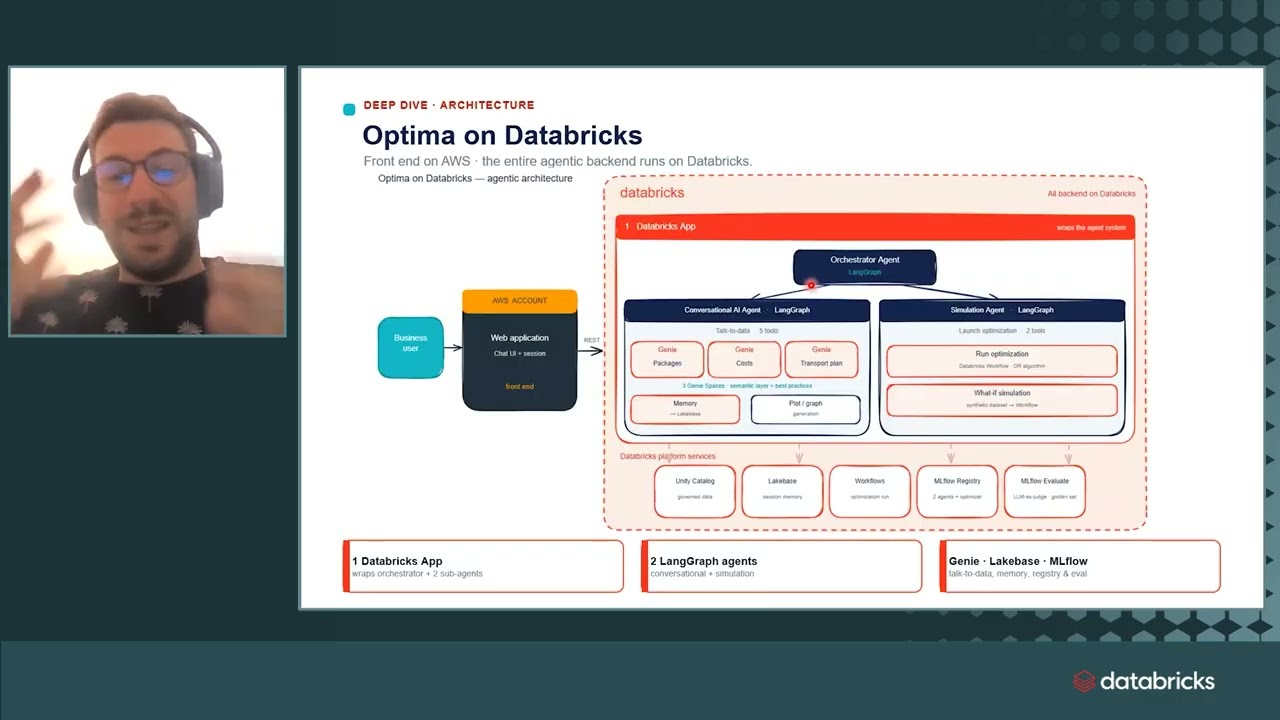
This video demonstrates how to build, update, and govern a store operations AI agent using Databricks Agent Bricks and the Unity AI Gateway. The tutorial highlights integrating custom Model Context Protocol servers, recording execution traces with MLflow, and enforcing security policies and budget controls.
 News
NewsHow ModMed Transforms Healthcare AI and Agentic Workflows with Databricks
ModMed uses the Databricks Lakehouse platform and Unity Catalog to build secure AI-enabled healthcare applications and agentic workflows. The integration of these tools allows both technical and non-technical users to access near real-time data insights and solve complex problems efficiently.
Connecting customer context to measurable ROI with agentic marketing
Agentic marketing relies on AI agents grounded in real-time, governed customer context and identity resolution to recommend next-best actions within defined guardrails. Moving incrementality measurement directly into this decision loop proves what changed because marketing acted, providing a shared basis for marketing and finance investment decisions.
How to scale agentic applications without creating AI sprawl
Scaling autonomous agentic applications without creating AI sprawl requires shared infrastructure for context, tooling, governance, and observability instead of rebuilding capabilities for every agent. Establishing centralized choice, governed enterprise context, and rigorous control ensures teams can adopt new models while enforcing scoped permissions, consistent policies, and operational tracing.
Lakebase Search: State-of-the-art full text and vector search for Postgres
Lakebase Postgres now includes a built-in search engine, generally available on AWS and Azure, that enables native semantic, keyword, and hybrid search directly alongside operational data without separate ETL pipelines. Featuring a serverless architecture that scales to zero and decouples storage from compute, it delivers twice the throughput at a quarter of the cost of cloud Postgres with pgvector on 100-million-vector benchmarks.
Manufacturing data and AI: Connecting the product value chain
Databricks connects fragmented manufacturing systems across functions and plants by unifying data or querying it in place to answer cross-stage value chain questions. Governed semantics, natural-language analytics, and agentic applications empower teams to move from finding data to taking action without becoming data engineers.
Learn Databricks AI Agents | Build, Deploy & Evaluate on Databricks Platform
Demo Material: Building and Orchestrating an Agentic App - AI Agent Fundamentals Plan
Context engineering is already possible in your warehouse. Here's how to get started.
Context engineering extends traditional BI data modeling to AI agents, starting with semantic search directly inside your warehouse. Learn how to get started applying these context modeling techniques within your existing warehouse environment.
Announcement | Genie One MCP: Give any AI Agent the Right Business Context
 News
NewsBig Data LDN 2026 - Lakebase & LTAP | Simon Whiteley & Holly Smith
Lakebase and LTAP enable two separate engines to read from a single copy of data by making PostgreSQL page servers and safekeepers behave like Delta or Iceberg tables. This architecture eliminates the need for manual synchronization between operational and analytical systems to support real-time AI agents and applications.
 News
NewsWhat are Agents & How they Work? #agent #llm #genai
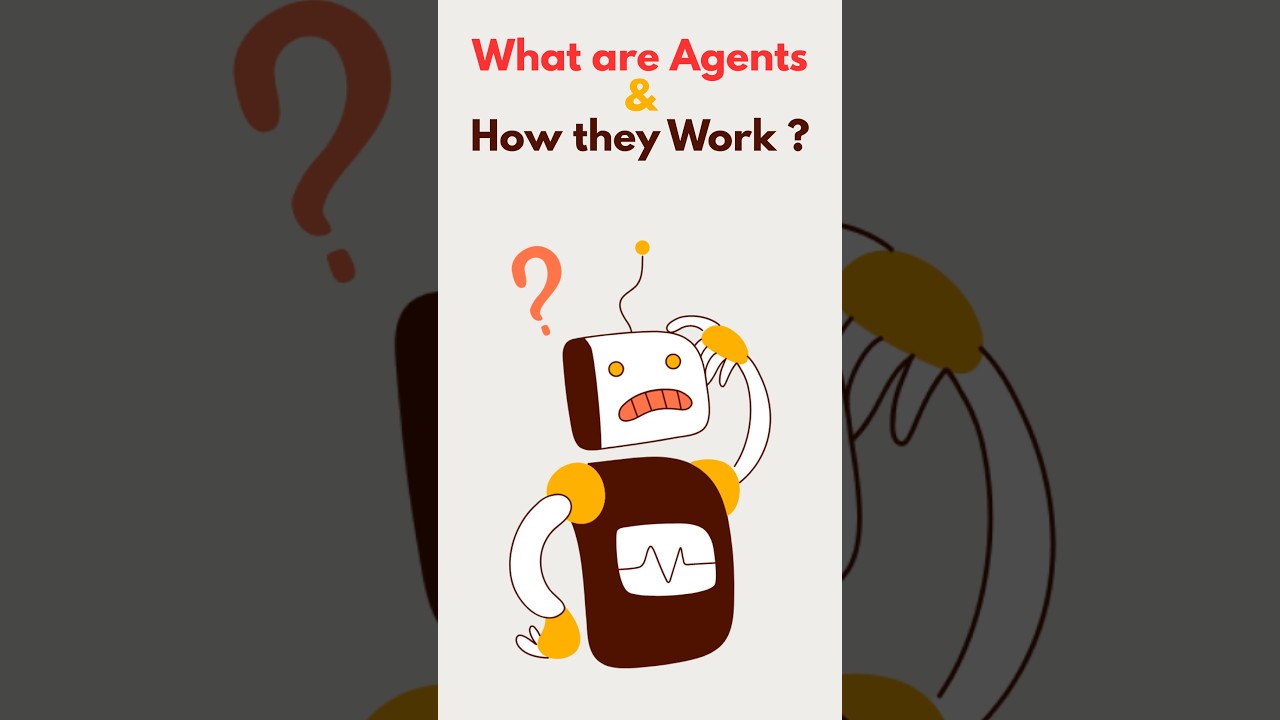
AI agents combine a large language model for reasoning, external digital tools for executing actions, and memory for tracking context to complete complex tasks autonomously. This architecture allows the system to continuously loop through planning, executing, and adjusting steps until a defined goal, such as organizing a chaotic folder of files, is fully achieved.
 Tutorials
Create a Genie Agent from Genie One
Genie One allows users to create automated AI agents by walking the system through a specific analytical workflow using natural language prompts. Once saved, these Genie agents can execute recurring tasks, apply organizational context, and run reports on a scheduled basis.
 News
News3. What is Databricks Unity AI Gateway and how it works
Databricks Unity AI Gateway places a centralized control plane in front of various AI models and tools to manage access and track spending. It allows users to route requests through a single endpoint for multiple models and automatically log usage costs into system tables for dashboard tracking.
How Concurrence governs clinical AI at a trillion-token scale with Unity Gateway
Concurrence scaled its clinical AI agent platform to an annualized 1.2 trillion tokens by consolidating its data and AI architecture on Databricks. The system pairs an immutable patient world model built on Delta tables and Lakebase with Unity Catalog and Unity Gateway to enforce compliance-gated model routing and continuous agent evaluation.
Live workshop on designing safe write paths, state management, and provenance for AI agents in production (Sept 26)
Most AI agent content teaches you how to build an agent. This one is about what happens after: keeping that agent reliable once it's actually writing into production systems. It's a 4 hour live session run as one continuous case study rather than disconnected exercises. Covers: Write conflicts, retries, and idempotency when agents write back into operational systems State and memory design for long running agents, and recovery when state drifts from reality Provenance and trace reconstruction, so you can explain an agent's decisions after the fact A capstone where you review an unfamiliar platform as lead architect and decide if it's production ready Intermediate to advanced. You should be comfortable with Python, RAG or retrieval pipelines, and basic data platform concepts going in. You keep the full recording, slides, an agent readiness audit framework, and a production failure mode catalogue. It's being led by Sandipan Bhaumik, a Data & AI Technical Lead at Databricks with 18+ years across data engineering, governance, and ML. Saturday Sept 26, 7 to 11 PM GMT+5. Register here if interested submitted by /u/camerongreen95 [link] [comments]
The Genie One MCP is now Generally Available
The Genie One MCP server is now generally available, bringing trusted insights across structured and unstructured data into any AI agent workflow. Grounded in Genie Ontology, it provides agents with governed access to unified business context across tables, documents, and tools to reduce conflicting answers and support queries, visualizations, and citations.
Genie One MCP: Give any AI Agent the Right Business Context
Genie One MCP brings governed business context to any MCP-compatible AI assistant, enabling external agents to reliably interpret metrics and respect user access rules. Powered by Genie Ontology's approved definitions, data relationships, and source authority, it delivers reliable, permission-aware answers directly inside the tools teams already use.
State of AI Agents
 Events
The Ontological Definition of Databricks Genie Ontology via OntoRank
Databricks Genie Ontology uses a ranking algorithm (OntoRank) to dynamically infer data definitions based on source credibility, usage frequency, and certification, enabling AI agents to answer questions without requiring formal ontologies. The tool democratizes data access but risks surfacing incorrect definitions if not paired with basic data governance practices.
Object Storage and WAL: Lakebase Postgres for the Agentic Era
Database Branching: A Developer's Guide to Git-Style Workflows
Database branching leverages copy-on-write mechanics to create isolated environments without full data copies, enabling production-like testing, per-PR CI pipelines, and migration-driven recovery. This approach provides critical infrastructure for short-lived AI agent workflows when paired with safety controls like protected parents, mock data, TTLs, and strict access policies.
Database for AI Agents: 5 Evaluation Criteria
Lakebase meets all five criteria a production-ready AI agent database needs—branch-per-agent isolation, scale-to-zero compute, hybrid search in a single query, ACID guarantees under concurrency, and a unified platform without ETL lag. Superhuman and easyJet's real-world deployments validate the approach against the continuous, concurrent read/write patterns agent memory demands.
How AI Agents Query Apache Iceberg Data with MCP
submitted by /u/codingdecently [link] [comments]
 Tutorials
How to Use Genie in Microsoft Teams & M365 Copilot
Databricks Genie is an AI agent integrated into Microsoft Teams and M365 Copilot that answers questions about data assets while respecting user permissions. The agent can be invoked in Teams direct messages, team channels, and M365 Copilot conversations, providing answers with source citations.
 News
NewsVibe Data Modeling: AI Data Models That Match Your Business
Vibe Data Modeling uses AI with 250 data modeling rules to generate customized business data models in hours rather than months, eliminating the painful process of adapting bloated off-the-shelf industry models. Databricks published 40 pre-built industry baseline models that organizations can iteratively customize with their own business rules using an AI agent, enabling data models to evolve as business requirements change.
Workshop, Sep 19: build explainable AI apps with Neo4j, GraphRAG, Cypher and LLM Agents
There's a hands-on workshop on September 19 relevant if your team runs its data platform on Databricks and is looking at adding an explainable, graph-backed RAG layer on top for reasoning over structured and unstructured data. You build: A knowledge graph in Neo4j that becomes your single source of truth for an agentic RAG system Agentic retrieval combining vector search, keyword search, and graph navigation Multi-step, verified entity and relationship extraction Text-to-Cypher for natural language graph querying Explainable, source-traceable answers with evaluation built in Runs on real financial filings and news data, working through a complete production use case. Led by Dr. Alessandro Negro, Chief Scientist at GraphAware, bestselling author. Link if you want to check it out submitted by /u/camerongreen95 [link] [comments]
Data Ontology defined: The context layer your AI agents are missing
AI agents inherit enterprise data architecture's old assumption—that a knowledgeable human fills the context gaps a schema leaves open—and that assumption breaks once the human is gone. Rather than repeating the shelfware fate of hand-modeled semantic layers and knowledge graphs, Databricks' Genie Ontology governs only the small set of concepts that must be correct and continuously learns the rest from how the organization actually operates.
How energy teams turn theft detection into governed action with Genie and AI business processes
A Databricks App orchestrates the full lifecycle of energy theft detection—turning ML-flagged suspicious accounts into prioritized investigations, dispatch-ready reports, and tracked recovery workflows, with Lakebase keeping live case state and recovery totals. Genie One, Unity Catalog, Unity Gateway, and Agent Bricks tie this together on one platform, delivering trusted metrics, governed AI usage, and automated executive reporting.
Could a “Data → Agent” composer be useful for Databricks?
I've been thinking about a gap between Databricks data and agent frameworks. Databricks already has a lot of the building blocks: - Unity Catalog - Genie / Genie Agents - MCP - Vector Search - AI Gateway - Agent skills/tools - MLflow - Omnigent / Kasal And tools like Omnigent and Kasal already solve a lot of the agent orchestration/execution side. But I'm wondering about the step before that: What if a customer already has a large, curated and governed Databricks data estate — how do we turn that data estate into an agent-ready configuration without manually wiring everything together? Something like: Existing Databricks Data Estate ↓ Data-to-Agent Composer ↓ ┌────────┼─────────┐ ↓ ↓ ↓ Domains Semantics Metrics ↓ ↓ ↓ Genie MCP Skills └────────┼─────────┘ ↓ Agent Configuration ↓ Omnigent / Kasal ↓ Agent The idea wouldn't be to build another chatbot or another agent framework. It would be a Databricks-native composition/bootstrapping layer that understands an existing Unity Catalog/data estate and generates the pieces needed for agents to work with that data — domain boundaries, semantic context, approved tools, Genie configuration, MCP exposure, skills, policies, evaluation setup, etc. In other words: Kasal/Omnigent: Agent → Tools/Data Proposed layer: Data Estate → Agent I'm curious if this is already solved somewhere in the Databricks ecosystem, or if people are currently doing this manually when building enterprise data agents. Would love to hear how others are approaching the “existing data estate → production-ready data agent” problem. submitted by /u/imsuryya [link] [comments]
Community BrickTalk | Real-Time Data & AI: Tripwise Demo
Hey r/Databricks ! Join us for community BrickTalk on Thursday, September 24 , focusing on real-time data streaming, AI agents, and governance using Databricks. BrickTalks is a community event series where Databricks experts share real-world use cases, demos, and practical insights for building with Data and AI, giving customers a direct line to the people behind the products. In this session, we'll walk through a live demonstration of the Tripwise Demo , featuring: Sub-Second Transactions & Streaming: Device registration into Lakebase with sub-second reads/writes, plus telemetry streaming via Zerobus through a governed Medallion architecture. AI-Generated Offers & Pricing: Generating real-time agent offers using Foundation Model APIs and scoring behavioral data for usage-based renewal pricing. Natural Language Analytics: Enabling underwriters, product managers, and marketing teams to query governed insurance data in seconds using AI/BI Dashboards and Genie. Unified Governance: Managing safety, compliance, and control end-to-end with Unity Catalog. This is a great chance to see real-world architecture in action and ask questions directly to Databricks experts. When: Thursday, September 24 9:00 AM PT 12:00 PM ET 5:00 PM BST (London) 9:30 PM IST Register here and save your spot submitted by /u/Subject_Ant1789 [link] [comments]
Subject: Possible incorrect answer key — Evaluating AI Agents assessment (Generative AI Engineer)
Google Drive connector in Lakeflow Connect is now generally available (GA)
The Lakeflow Connect connector for Google Drive is now generally available ! It’s now easier than ever to ingest structured and unstructured files from Google Drive into Delta tables for analytics and AI workloads. You can configure a managed ingestion pipeline through the UI or managed API. Managed pipelines automatically handle incremental processing, automatic retries with exponential backoff for source API rate limits, failure recovery, and provide rich Google Drive metadata. For direct control over ingestion logic, you can also just use the Spark + SQL APIs directly: spark.read , Auto Loader, read_files, or COPY INTO pointed at Google Drive URLs. https://preview.redd.it/j65yaaft3uoh1.png?width=2048&format=png&auto=webp&s=0f9f13cc63572b991232a8fa617aa1fe6697369c Link to public docs + references: Google Drive managed connector documentation Spark + SQL APIs and examples Community blog and video tutorial: From PDF to insights Data + AI Summit session: Intelligent Document Processing with Lakeflow Common workloads include: Loading Google Sheets, Excels, CSV, JSON, and other structured files into Delta tables. Ingesting PDFs, Google Docs, Google Slides, and images. Parsing documents with ai_parse_document to prepare content for extraction, search, and agents. Examples of using the Spark + SQL APIs: Read an Excel sheet from Google Drive with spark.read : df = (spark.read .format("excel") .option("databricks.connection", "my_gdrive_conn") .load("https://docs.google.com/spreadsheets/d/9k8j7i6f...")) Ingest unstructured documents + PDFs from a Google Drive URL with read_files , then easily parse them using ai_parse_document : CREATE OR REFRESH STREAMING TABLE gdrive_documents_table AS SELECT *, "_metadata" FROM STREAM read_files( "https://drive.google.com/drive/folders/1a2b3c4d...", format => "binaryFile", `databricks.connection` => "my_gdrive_conn", pathGlobFilter => "*.{pdf,docx}"); CREATE OR REFRESH STREAMING TABLE documents_parsed AS SELECT *, ai_parse_document(content, map('version', '2.0')) AS parsed_content FROM STREAM gdrive_documents_table; Coming soon: Ingest Google Drive’s per-file permissions and ACL metadata to power permission-aware AI agents, enterprise search, and more. If you try it, share what you are building and let us know if you hit any friction! submitted by /u/BricksterJ [link] [comments]
SharePoint connector in Lakeflow Connect is now generally available (GA)
The Lakeflow Connect connector for Microsoft SharePoint is now generally available! It’s now easier than ever to ingest structured and unstructured files from SharePoint into Delta tables for analytics and AI workloads. You can configure a managed ingestion pipeline through the UI or managed API. Managed pipelines automatically handle incremental processing, automatic retries with exponential backoff for source API rate limits, failure recovery, and provide rich SharePoint metadata. Soon, our managed connectors will also support ingesting SharePoint Lists and per-file permissions metadata. For direct control over ingestion logic, you can also just use the Spark + SQL APIs directly: spark.read , Auto Loader, read_files, or COPY INTO pointed at SharePoint URLs. Common workloads include: Loading Excel, CSV, JSON, and other structured files into Delta tables. Ingesting PDFs, Word documents, PowerPoint files, and images. Parsing documents with ai_parse_document to prepare content for extraction, search, and agents. https://preview.redd.it/89i379aattoh1.png?width=2180&format=png&auto=webp&s=292350dfddfc9bc1a4daf3fc4447394821206054 Link to public docs + references: SharePoint managed connector documentation Spark + SQL APIs and examples Community blog and video tutorial: From PDF to insights Data + AI Summit session: Intelligent Document Processing with Lakeflow Examples of using the Spark + SQL APIs (after first creating a UC connection ) : Read an Excel sheet from SharePoint with spark.read : excel_df = (spark.read .format("excel") .option("databricks.connection", "my_sharepoint_conn") .option("headerRows", 1) .option("dataAddress", "Sheet1!A1:M20") .load(" https://mytenant.sharepoint.com/sites/Finance/Shared%20Documents/Monthly/Report-Oct.xlsx") ) Ingest unstructured documents + PDFs from a SharePoint URL with read_files , then easily parse them using ai_parse_document CREATE OR REFRESH STREAMING TABLE sharepoint_documents_table AS SELECT , "_metadata" FROM STREAM read_files( " https://mytenant.sharepoint.com/sites/Marketing/Shared%20Documents ", format => "binaryFile", databricks.connection => "my_sharepoint_conn", pathGlobFilter => " .{pdf,docx}"); CREATE OR REFRESH STREAMING TABLE documents_parsed AS SELECT *, ai_parse_document(content, map('version', '2.0')) AS parsed_content FROM STREAM sharepoint_documents_table; Coming soon: Ingest SharePoint Lists into Delta tables (coming super super soon) Ingest SharePoint’s per-file permissions and ACL metadata to power permission-aware AI agents, enterprise search, and more. If you try it, share what you are ingesting and where you hit friction! Don't hesitate to ask questions! submitted by /u/BricksterJ [link] [comments]
Announcement | How we eliminated $1 million a year of wasted AI agent spend in one hour
Introducing Consort: Test-driven development on a branching database
Consort brings test-driven development to database branching, giving each branch its own isolated copy of data so tests run against realistic state without touching production. The post walks through what changes when your database can branch like code, demonstrates an agentic development workflow built on it, and shows how to try Consort yourself.
Evaluation-First AI Agents: How Zepto Scales Customer Support on Databricks and MLflow
Zepto built its customer support agents on Databricks and MLflow using an evaluation-first approach, treating traces, golden datasets, and LLM-as-judge checks as core infrastructure and connecting development and production through a dual-loop architecture with a strict quality gate. The result: 65% lower support costs and payback in under a month, giving other AI builders a reusable blueprint for engineering reliability, cost, and risk into production-grade agents.
I merged two databases (Postgres and Elasticsearch) into Lakebase, then threw 200 AI agents at it.
submitted by /u/Limp-Park7849 [link] [comments]
 Tutorials
3. What is Unity AI Gateway | How to Control AI Spending
Unity AI Gateway sits in front of multiple AI models and lets you abstract them behind a single endpoint, enabling seamless model swaps without changing application code. Every request gets logged to system tables, giving you centralized visibility into spending and usage per model, user, and tool.
Community BrickTalk | One Platform, Any Source: Unifying Enterprise Data with Lakeflow Connect
Hey r/Databricks ! We’re hosting a free, community-sponsored BrickTalk on Thursday, September 17, 2026, focusing on how to simplify and scale data ingestion using Lakeflow Connect! BrickTalks is a community event series where Databricks experts share real-world use cases, live demos, and practical insights, giving you a direct line to the people building the products. Stop struggling with fragmented data across disparate sources. In this session, we'll demonstrate how Lakeflow Connect enables seamless data ingestion from SaaS apps, databases, and cloud storage directly into the Databricks Platform with zero infrastructure management. 🛠️ What We’ll Cover Native Data Ingestion: Learn how Lakeflow Connect provides fully managed ingestion directly into Unity Catalog as governed Delta tables. Simple Integration: See how to easily connect data sources using a simple UI or API. Accelerated AI & Analytics: Discover how unifying your data powers Customer 360, Operations, and downstream AI agent workloads. ⏱️ Global Times PT: 9:00 AM ET: 12:00 PM BST (London): 5:00 PM IST: 9:30 PM 👉 Register here to save your spot! submitted by /u/Subject_Ant1789 [link] [comments]
The 40-year-old database rule agents just broke: How LTAP unifies OLTP and OLAP workloads
LTAP (Lake Transactional/Analytical Processing) resolves the decades-old row-versus-column tradeoff between OLTP and OLAP systems by unifying transactional and analytical workloads at the storage layer rather than the engine layer, succeeding where HTAP has historically stalled. This shift is driven by AI agents, which need near-real-time read and write access to live operational data at a speed and cost neither traditional pipelines nor HTAP architectures can deliver.
Databricks-Native AI Agent for Job Incident Detection, RCA & Safe Remediation
Governance beyond security: knowledge, context & ontology on the lakehouse
Existing governance artifacts like classification tags, data contracts, and lineage provide the semantic foundation needed to run catalog-centered AI agent lifecycles directly within Unity Catalog. Anchoring this business context in catalog metadata keeps production PHI within governed boundaries while allowing cheaper models to deliver trusted results.
Agentic AI moves fast. Your data decisions should move faster.
submitted by /u/ConstantNo2668 [link] [comments]
 Tutorials
2. AI Agent Policies: How to Control What Agents Can Do
AI agent policies sit between agents and their tools to evaluate actions and enforce spending limits, tool usage restrictions, and risk scores. Using the open-source Omnigent framework, developers can configure these policies to automatically pause execution and require human approval when thresholds are crossed.
Announcing the Databricks Big Book of AgentOps
The Databricks Big Book of AgentOps provides a practical blueprint for building, evaluating, governing, and improving AI agents in production. It delivers field-tested architectures, technical best practices, and guidance across observability, cost management, and stakeholder alignment while highlighting common pitfalls to avoid.
How we eliminated $1 million a year of wasted AI agent spend in one hour
Broken MCP tool calls and silent retries can quietly waste over $1 million annually in tokens and engineering hours across AI agent fleets. Tracing tool calls with Unity Gateway and analyzing spend with Genie One enables teams to rapidly deploy fixes and design tools that gracefully handle ambiguous LLM inputs.
How Discovery Bank delivers hyper-personalized banking at scale: behavioral AI, governed data, and real-time decisioning
Discovery Bank achieved a 40% uplift in client engagement impact by building reusable, AI-driven data products and real-time next-best action models on Databricks. Their architecture accelerates data pipeline workflows by 20x and data product creation by 5x while ensuring AI agents operate within existing governance controls.
Building Agentic Applications on Databricks - file not found for ./Includes/Classroom-Setup-2
 News
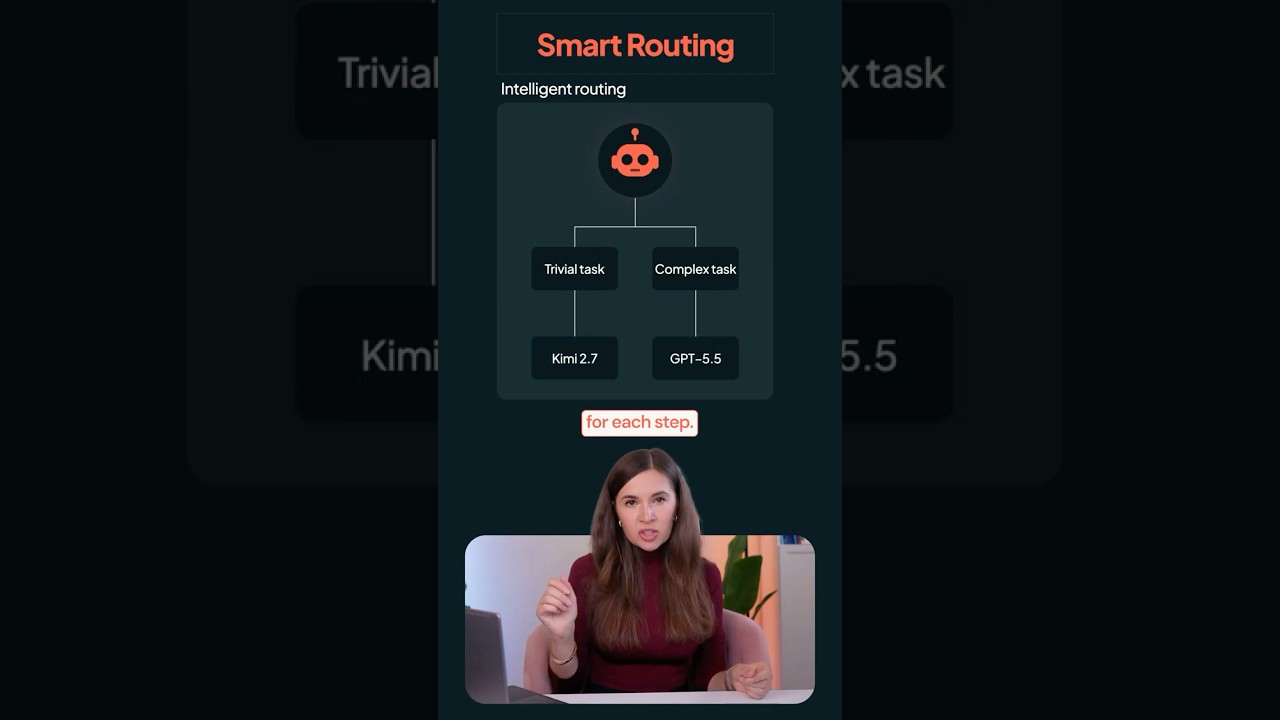
News1. AI Model Routing: How Smart Routing Picks the Right LLM
Smart routing evaluates individual development tasks separately to assign them to the most cost-effective capable language model. The approach automatically splits work across different models and runs agents in parallel to build applications more efficiently.
Building for the AI Era: Lakebase, Streaming, and Lakehouse Innovations at VLDB 2026
Databricks is bringing Lakebase, Structured Streaming, and Lakehouse optimizations to VLDB 2026, spotlighting Lakebase as a third-generation cloud database that decouples transactional compute from storage to support agentic workflows. The company's Engineering and Recruiting teams will also be on-site at the conference.
Vertical Advantage: Transforming Industries with Lakebase and Agentic AI
Databricks Lakebase partners are shipping production-ready, industry-specific solutions—from fraud and regulatory-change agents to real-time claims, prior authorization, dynamic pricing, and grid intelligence—built on a single governed foundation for operational data, analytics, and AI. Powered by Lakebase's serverless Postgres, sub-10ms operational serving, zero-copy branching, and agent-native memory, these solutions are deployable today and designed to turn platform capability into measurable business value.
Object Storage + WAL: Lakebase Postgres for the agentic era
Lakebase Postgres now decouples storage from compute by pairing object storage with a write-ahead log, targeting the I/O bottlenecks agentic workloads create in traditional OLTP setups. The architecture is built for new deployments handling agent-driven database interactions rather than retrofitted onto existing ones.
Introducing Governance Hub: Intelligent, account-level governance over your Databricks estate
Governance Hub gives Databricks admins a single, account-level view of data governance, AI usage, and cost across their entire estate, with each vertical surfacing KPIs and drill-downs so teams can assess governance health without building custom dashboards. A built-in Genie layer adds agentic insights, surfacing anomalies and governance gaps enriched with context about the underlying assets and workloads.
 Tutorials
Pages in Unity Catalog: Govern Business Knowledge for Humans and AI
Databricks' Pages feature enables teams to author and publish authoritative definitions of business concepts, metrics, and terms within Unity Catalog Semantics, organized by domain. Genie AI uses these human-curated pages to answer questions with verified sources and citations, replacing guesswork with trustworthy, governed knowledge.
How Databricks Uses AI to Accelerate Incident Investigation
Databricks' AI SRE now handles over 2,000 daily investigations across 150+ teams, helping engineers troubleshoot 100s of microservices spread across 1,500 Kubernetes clusters in 70+ regions and three clouds. Rather than relying on black-box reasoning, the system uses composable agentic runbooks and ties every diagnostic recommendation to verifiable raw evidence, embedding a context-first approach into its design.
Get Tuesday's version of this
Tracking AI Agents? The Tuesday email carries what moved across the whole ecosystem, not just this topic. Free, one-click unsubscribe.