
Description
Language models are incredible engineering breakthroughs but require auditing and risk management before productization. These systems raise concerns about toxicity, transparency and reproducibility, intellectual property licensing and ownership, disinformation and misinformation, supply chains, and more. How can your organization leverage these new tools without taking on undue or unknown risks? While language models and associated risk management are in their infancy, a small number of best practices in governance and risk are starting to emerge. If you have a language model use case in mind, want to understand your risks, and do something about them, this presentation is for you! We'll be covering the following: - Studying past incidents in the AI Incident Database and using this information to guide debugging. - Adhering to authoritative standards, like the NIST AI Risk Management Framework. - Finding and fixing common data quality issues. - Applying general public tools and benchmarks as appropriate (e.g., BBQ, Winogender, TruthfulQA). - Binarizing specific tasks and debugging them using traditional model assessment and bias testing. - Engineering adversarial prompts with s…
Description from YouTube. Full content on the video page.
Topics
More from Databricks
 News
NewsHow AI and Data Keep 2.3 Million Lawns Healthy | TruGreen & Databricks
TruGreen uses Databricks Genie and Lakehouse to manage 2.3 million lawns with AI that optimizes service timing and predicts customer churn using weather, soil, and service data. The system enables non-technical branch managers to take daily actions through customized reports without requiring data expertise.
 News
NewsHow FOX Sports Uses AI to Power Search
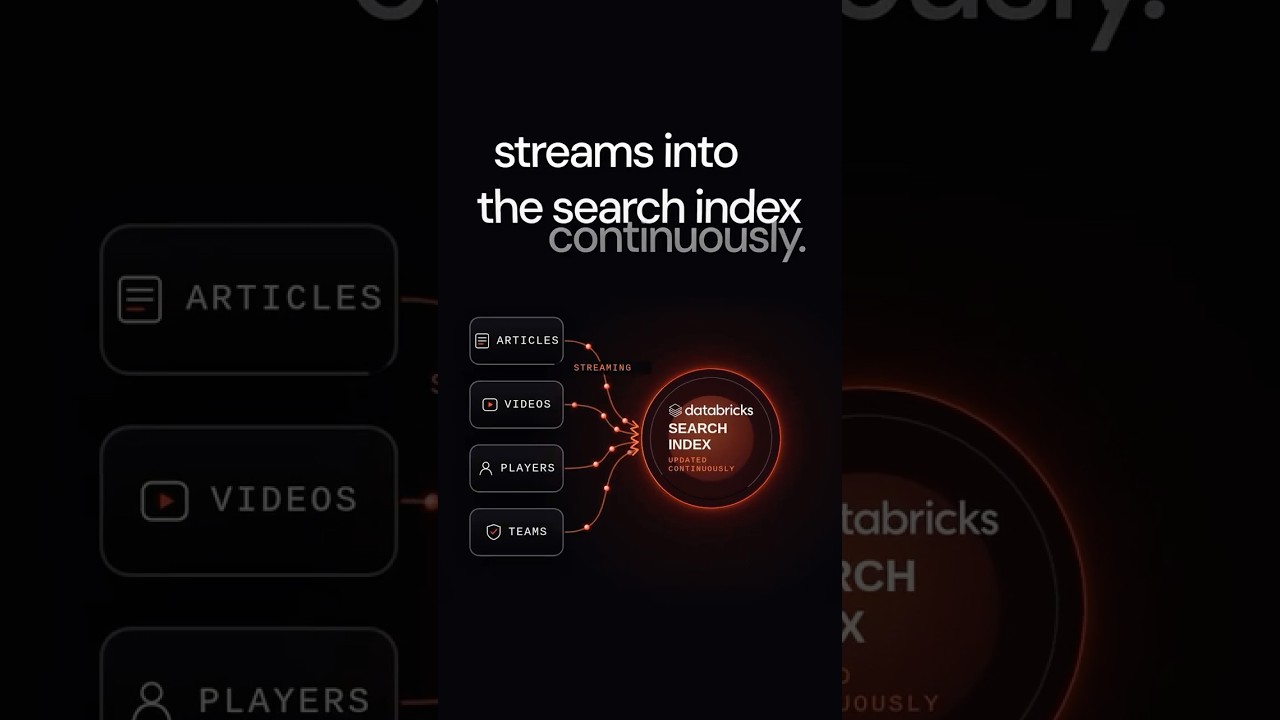
Fox Sports rebuilt their search system on Databricks to handle rapidly changing sports information by continuously streaming player, team, and content data into the index while computing real-time trends. The system uses semantic vector search with time-weighted ranking to surface fresh content higher, doubling the rate at which users find what they're looking for.
 News
NewsHow AI Helps Match Doctors With Communities in Need | Databricks for Good
Databricks provides pro bono services and compute discounts to help nonprofits stay lean through its Databricks for Good program. The video demonstrates the Virtue Foundation agent, which uses Genie and interactive hex maps to identify underserved populations and medical facility distribution in Kenya.
 News
NewsOmnigent: Open-Source Meta-Harness for AI Agents | Matei Zaharia
Omnigen is an open-source meta-harness developed by Databricks that acts as an orchestration and control layer to wrap, manage, and combine multiple AI coding agents. The platform introduces contextual security policies, cost controls, multi-agent task routing, and sandbox integrations to enable collaborative workflows and centralized governance.
 News
NewsBuilding Agents on Databricks with Custom Apps and Omnigent
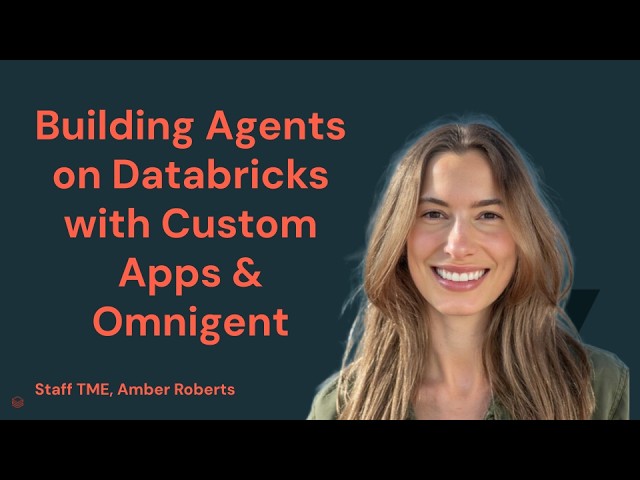
This video demonstrates how to build, update, and govern custom AI agents on Databricks using Agent Bricks, Databricks Apps, and Omnigent. The tutorial shows how to integrate Model Context Protocol servers, track execution with MLflow traces, schedule automated agent tasks, and manage security policies through Unity AI Gateway.
 News
NewsGoverning AI Strategy with Unity AI Gateway
The Unity AI gateway provides centralized monitoring, cost tracking, and governance for enterprise AI models, MCP servers, and coding agents. Administrators can use the platform to set budget limits, configure external providers, and enforce input policies that block personally identifiable information.