


Unity AI Gateway
Recent items mentioning Unity AI Gateway across the Databricks ecosystem — releases, news, videos, and community Q&A. Updated hourly.
Databricks announced the general availability of Unity AI Gateway, introducing centralized multi-model governance, budget controls, and observability for enterprise AI agents 56. Databricks SDK releases for Python, Java, and Go now support programmatic skill management within the gateway alongside new Unity Catalog securable types for skills and agent services 4710.
Generated daily from the 10 most recent items mentioning Unity AI Gateway. Click any [N] to jump to the source.
Governing AI Strategy with Unity AI Gateway
MLflow 3.17.0
MLflow 3.17.0 introduces fine-grained access control for runs and traces, links evaluation metrics directly to managed datasets, and adds support for Databricks Unity Catalog model service resources. Self-hosted SQL tracking servers require a coordinated schema migration via mlflow db upgrade with all writers stopped, as rolling deployments are not supported.

The SDK introduces environment variable configurations and maintenance window notifications across Jobs and Tasks, along with new skill management APIs in AI Gateway. It also adds the Mason workspace service and makes CommandPath in job deployments and ApiSecretRef in ML schema registries optional.
 Events
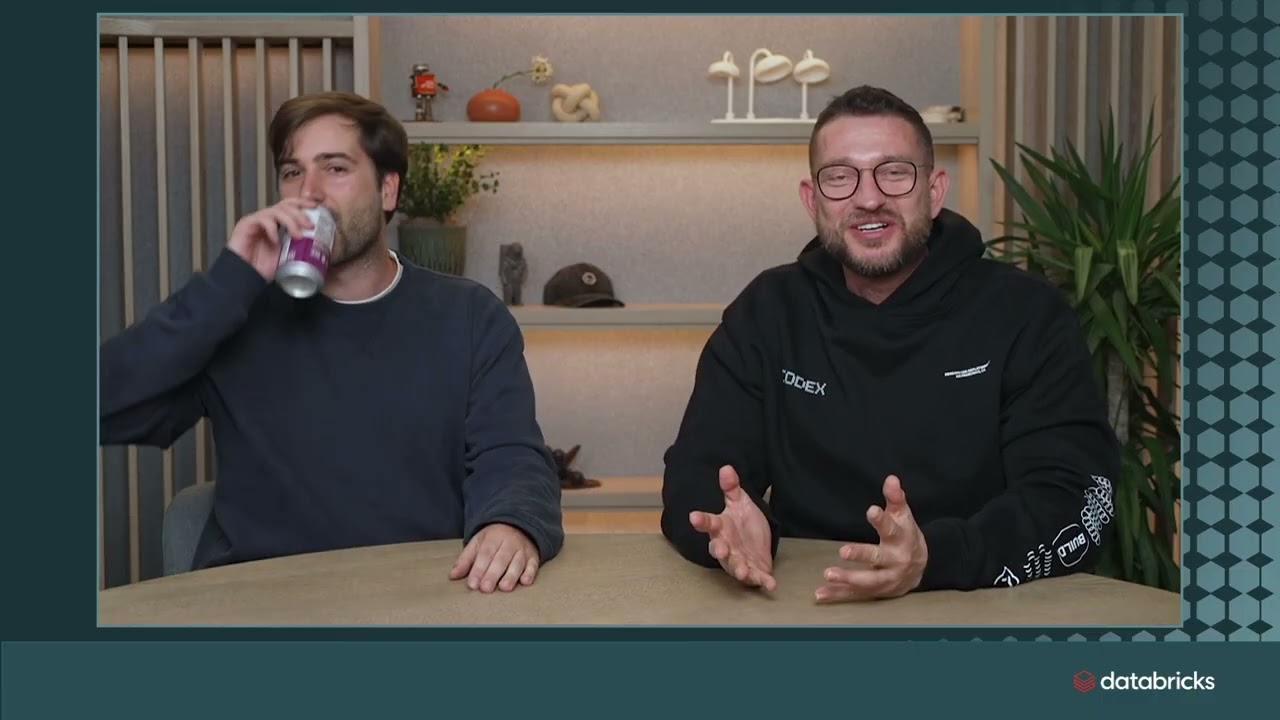
How Enterprises Govern AI Agents Across Multiple Models
Databricks announced the general availability of the Unity AI gateway to provide centralized multi-model governance, cost controls, and end-to-end observability for enterprise AI agents. Panelists discussed how coding agents and harnesses are evolving beyond programming into long-running operations, personal software development, and automated organizational workflows.
 Events
Demo: Building a Governed AI Agent with Unity AI Gateway
This video demonstrates how to build, update, and govern a store operations AI agent using Databricks Agent Bricks and the Unity AI Gateway. The tutorial highlights integrating custom Model Context Protocol servers, recording execution traces with MLflow, and enforcing security policies and budget controls.
This release adds the Mason service, AI Gateway skill management methods, and new Unity Catalog securable types for skills and agent services. It also introduces maintenance notifications for jobs, support for TikTok Ads and Smartsheet ingestion sources, and budget policy controls for ML feature operations.
Azure Databricks, two-week-old account: partner pay-per-token endpoints (Claude, Grok) have never once succeeded — "Databricks-set rate limit of 0" — and the Assistant has "no daily token allowance". Open models work. What gates this?
Azure Databricks, Premium, one account with three workspaces, Unity Catalog, Azure Marketplace billing (no card, no trial credits left). The account was bootstrapped on a trial workspace about two weeks ago and moved to Premium six days later. I've spent two days on this and want a sanity check from anyone who has seen it. The facts, from system.serving.endpoint_usage: • Every open-weight pay-per-token endpoint has worked since the trial: gpt-oss-120b has ~50 successful calls going back to the trial period, Llama 3.3 70B likewise, zero refusals. • No partner pay-per-token endpoint has ever returned a success on this account. The very first call anyone made to databricks-claude-sonnet-5 was refused, and every call since, on every Claude endpoint and on Grok, in all three workspaces, for users and service principals alike: 403 PERMISSION_DENIED: The endpoint is temporarily disabled due to a Databricks-set rate limit of 0. • It is not our AI Gateway config: I removed every rate limit from one Claude endpoint and invoked it — same 403. The endpoints' config shows nothing else. • The notebook Assistant worked during the trial. On the paid account it refuses everyone, admins included: *"This workspace has no daily token allowance for the assistant."* Underneath, /ajax-api/2.0/conversation/llmproxy/ returns 429 {"type":"daily_token_limit_reached","daily_limit_tokens":0,"message":"…Daily token limit of 0 reached. Resets at midnight UTC. (DTB)"} and it recomputes to 0 every midnight. • Once, the Databricks Apps in the workspace were stopped by the platform with *"App compute was stopped due to workspace or account status"* while every workspace showed RUNNING. apps start brought them back. Red herring, for completeness: we also created a Unity AI Gateway per-user budget whose first version had a $0 threshold with BLOCK_USAGE. That blocked Genie for a day, exactly as documented, and was fixed. It was created a day *after* the first Claude refusal, so it isn't the cause of any of the above. What I've found: two Community threads describe "Databricks-set rate limit of 0" as a workspace trust-tier gate — trial-born accounts sit in TRIAL_VERIFIED, pay-per-token partner models are gated to PAYABLE_VERIFIED, a card alone doesn't flip it, only Databricks Sales/Support moves the tier. Both were AWS/personal accounts, neither resolved on-page. The account console's own API reports our account's feature_tier as STANDARD_W_SEC_TIER although the workspaces are Premium; I can't find what that field means. Questions • Does Azure Databricks with Marketplace billing go through the same PAYABLE_VERIFIED gate? Does it clear on its own after the first settled invoice, or does someone have to move it? • If you were moved: who did you contact (account team, or "Contact us" in the console) and how long did it take? • Is the Assistant's "daily token allowance" the same gate, or a trial allowance that simply goes to 0 when the trial ends on an unverified account? • Does feature_tier: STANDARD_W_SEC_TIER on the account object mean anything to anyone? submitted by /u/sumit671 [link] [comments]
Balancing Model Agility and Centralized Governance with Mosaic AI Gateway
The Databricks Python SDK introduces skill management operations to the AI Gateway workspace client. Users can now create, retrieve, list, update, finalize, and delete skills programmatically using new methods on the AI Gateway service.
AI is apparently getting a new name: SI (Super Intelligence)
Donald Trump said at the UN that super-intelligence will replace artificial intelligence in US government documents. If you work with Databricks, this probably sounds strangely familiar. So now I’m wondering… was Databricks just preparing for this? Because there are still plenty of names left: AI Search → SI Search? AI Functions → SI Functions? AI Runtime → SI Runtime? AI Gateway → SI Gateway? P.S. I keep track of Databricks renames and product changes on REbricked.org submitted by /u/Significant-Guest-14 [link] [comments]
 News
News3. What is Databricks Unity AI Gateway and how it works
Databricks Unity AI Gateway places a centralized control plane in front of various AI models and tools to manage access and track spending. It allows users to route requests through a single endpoint for multiple models and automatically log usage costs into system tables for dashboard tracking.
Databricks 5 Minute Features: Unity AI Gateway
Seems like there is a bit of naming-confusion with Unity AI Gateway - but that should not take away from the feature itself. Have you started using it yet? In this video I try to give you an overview of how and why to use it! submitted by /u/Remarkable_Rock5474 [link] [comments]
Fixed databricks_grant and databricks_grants for AI Gateway securables (model_service, mcp_service, model_provider_service), which previously failed when using resource names that included API prefixes like 'model-provider-services/'. The provider now automatically strips these prefixes before API calls and treats both prefixed and bare resource names as equivalent, eliminating apply failures and perpetual diffs.
This release adds AI Gateway credential management APIs for MCP services and expands data pipeline connectors to include TikTok Ads and Smartsheet as ingestion sources. It also introduces Avro and Protobuf transformer format support for pipelines, timezone configuration for ML job scheduling, and new securable types for agent services and skills.
What is release status Databricks Micro Apps?
The serverless micro apps were announced at Summit , but can't seem to find the current status. Usually that means gated private preview, but wanted to confirm. This post on Brickster.ai seems to be current and says as of this week still not released, but things change fast around here (releases, names (are we using Unity Gateway, AI Gateway, what?)) so thought I'd check. I'm actually presenting on apps this week at a user group so would appreciate the info. submitted by /u/ecp5 [link] [comments]
The SDK adds new credential management methods for MCP services in AI Gateway and expands job notifications to include maintenance-related events. Support for additional data formats (Avro, Protobuf) in pipelines and new connection types (TikTok Ads, Smartsheet) extend integration capabilities.
Unity AI Gateway is renamed to Unity Gateway and is now GA
Unity Gateway is Generally Available Move from tokenmaxxing to valuemaxxing with unified AI governance and cost control submitted by /u/sai-nageshwaran [link] [comments]
The SDK adds MCP service user mapped credential management APIs to the AI Gateway service, enabling better credential handling for AI workloads. Pipeline transformers now support AVRO and PROTOBUF formats and include a groupName field for RunAs configuration.
Direct deployment state version 3 is a breaking change requiring Databricks CLI v1.8.0 or later. New capabilities include Docker credential helpers for Databricks Artifact Registry, AI Gateway service support in bundles, file-change job run triggers, and bundle improvements for resource reference handling, deployment reporting, and state management.
 News
NewsAI Watermarking, Databricks AI Extract, Hugging Face, and Unity Catalog | AI Newsround - Summer 2026
Claude and other AI models will invisibly watermark generated text to ensure content traceability, while Databricks AI Extract achieves 94.7% accuracy on complex documents and extracts charts as structured data. Databricks added skills to Unity Catalog as governed assets and launched AI Gateway to centralize access to multiple AI models, enabling rapid evaluation and swapping without code changes.
 Tutorials
How to Govern Your AI Estate in One Place
Databricks launches Governance Hub, a unified web-based platform that centralizes governance and observability for data, cost, and AI usage across an entire organization. The hub enables admins to monitor spending at multiple levels (account to individual jobs), enforce per-user AI budgets with hard spend caps, and manage data access and quality through a single account-console interface.
Could a “Data → Agent” composer be useful for Databricks?
I've been thinking about a gap between Databricks data and agent frameworks. Databricks already has a lot of the building blocks: - Unity Catalog - Genie / Genie Agents - MCP - Vector Search - AI Gateway - Agent skills/tools - MLflow - Omnigent / Kasal And tools like Omnigent and Kasal already solve a lot of the agent orchestration/execution side. But I'm wondering about the step before that: What if a customer already has a large, curated and governed Databricks data estate — how do we turn that data estate into an agent-ready configuration without manually wiring everything together? Something like: Existing Databricks Data Estate ↓ Data-to-Agent Composer ↓ ┌────────┼─────────┐ ↓ ↓ ↓ Domains Semantics Metrics ↓ ↓ ↓ Genie MCP Skills └────────┼─────────┘ ↓ Agent Configuration ↓ Omnigent / Kasal ↓ Agent The idea wouldn't be to build another chatbot or another agent framework. It would be a Databricks-native composition/bootstrapping layer that understands an existing Unity Catalog/data estate and generates the pieces needed for agents to work with that data — domain boundaries, semantic context, approved tools, Genie configuration, MCP exposure, skills, policies, evaluation setup, etc. In other words: Kasal/Omnigent: Agent → Tools/Data Proposed layer: Data Estate → Agent I'm curious if this is already solved somewhere in the Databricks ecosystem, or if people are currently doing this manually when building enterprise data agents. Would love to hear how others are approaching the “existing data estate → production-ready data agent” problem. submitted by /u/imsuryya [link] [comments]
Smart Routing in Unity AI Gateway: 30%+ Cost Savings on Coding Tasks
 Tutorials
3. What is Unity AI Gateway | How to Control AI Spending
Unity AI Gateway sits in front of multiple AI models and lets you abstract them behind a single endpoint, enabling seamless model swaps without changing application code. Every request gets logged to system tables, giving you centralized visibility into spending and usage per model, user, and tool.
What’s new in Databricks - August 2026
Databricks shipped many major Generally Available features in August 2026. Here is the breakdown of what just landed: 🚀 Unity AI Gateway Enterprise AI governance layer covering model access, Model Context Protocol (MCP) management, and cost observability. 🔒 Role-Based Access Control (RBAC) Switch to scoped, temporary role assumptions instead of dealing with permission bloat. 🔑 Secrets in Unity Catalog Unified security secrets are now governed, 3-level namespace securable objects. ⚙️ Serverless Compute Access Control Granular admin controls over who can trigger serverless workloads across your organization. ⚡ Lakebase Postgres APIs & LTAP Direct Writes Accelerated synced-table loads and improved transactional data integration. 🤖 Genie Agent Upgrades Official GA releases for both the Agent mode API and Full-page Genie Code view. submitted by /u/Youssef_Mrini [link] [comments]
Evaluating Unity AI Gateway for Enterprise Cost Control
Fixing SSL: CERTIFICATE_VERIFY_FAILED when trying to use ucode
While configuring ucode for UC skills I get the following error when running ucode configure ERROR Databricks Unity AI Gateway is not enabled on this workspace: neither model services (network error: [SSL: CERTIFICATE_VERIFY_FAILED] certificate verify failed: self-signed certificate in certificate chain (_ssl.c:1082)) nor legacy endpoints (network error: [SSL: CERTIFICATE_VERIFY_FAILED] certificate verify failed: self-signed certificate in certificate chain (_ssl.c:1082)) are available. I successfully made it past the SSO authentication. I verified this is not an enablement issue. Also, Unity Gateway is enabled by default. When searching, I found 4 suggested solutions. Update Your Root Certificates by running pip install --upgrade certifi . Ran fine, but no change. Bypass SSL Verification. I did not try this as it exposes your connection to man-in-the-middle attacks. Obtain your company’s root/intermediate CA certificate in PEM format and then point to it. Asking IT does not sound like a good solution.
MLflow 3.16.0
MLflow 3.16.0 makes the redesigned trace explorer the default interface, introducing natural-language custom trace views via the MLflow Assistant, session grouping for multi-turn conversations, and span links. The update also adds Unity Catalog model service support for built-in evaluation judges, per-user AI Gateway budget policies, and fail-closed authorization by default.
 Tutorials
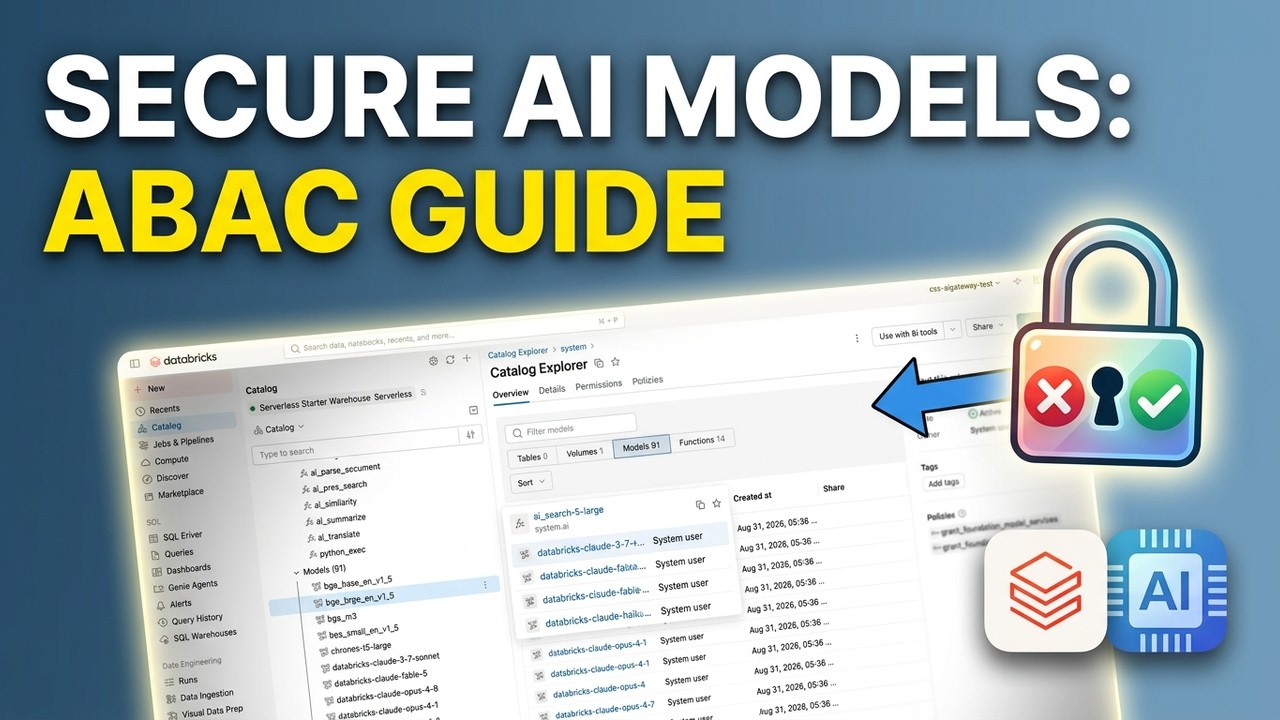
Govern Models and Model Services Using ABAC Grant Policies
Databricks models and model services can be opted out of using catalog tags combined with attribute-based access control grant policies. Executing this setup requires applying tags to specific models, writing programmatic policies with exclusion statements, and revoking schema-level permissions.
How to enable guardrails to an existing LangGraph agent deployed on a Databricks Serving Endpoint?
I have a LangGraph agent deployed as a Unity Catalog model on a Databricks Serving Endpoint. User : -> Databricks Serving Endpoint: -> UC Model: ai_workspace.agent.agent: -> LangGraph Agent: -> LLM + Tools The serving endpoint shows AI Gateway enabled , but its configuration currently only shows usage tracking. I would like to apply Unity AI Gateway guardrails to this agent. When I go to AI Gateway → Model Service → Create Model Service , I can configure guardrails, but my existing UC model: ' ai_workspace.agent.agent' does not appear in the Destination list. The available destinations appear to be Databricks-hosted foundation models and other supported model providers. My questions are: Can Unity AI Gateway guardrails be applied directly to an existing LangGraph agent deployed on a Databricks Serving Endpoint? If not, can I configure the LangGraph agent to use a Model Service as its underlying LLM endpoint, so that the LLM requests are governed by AI Gateway guardrails? Would those guardrails apply only to the LLM request/response, or can they also govern the LangGraph agent's tool calls and overall execution? What is the recommended Databricks architecture for applying AI Gateway guardrails to a custom LangGraph agent? Is the AI Gateway enabled option on a custom/agent serving endpoint different from the newer Unity AI Gateway Model Service functionality?
Can Unity AI Gateway Model Service guardrails protect an existing LangGraph agent deployed as a Data
External price control
In the Unity AI gateway, it is also possible to register an external model for which we pay the provider directly (OpenAI, Anthropic, etc.). In that case, Databricks now knows the prices for those models and can calculate, monitor usage, and alert or block based on budgets. more news https://medium.com/databrickscommunity/databricks-news-serverless-genie-code-ltap-lakeflow-61853d8e422a submitted by /u/hubert-dudek [link] [comments]
Skills in Unity Catalog
Skills are available in Unity Catalog. They use a similar concept to volumes and are integrated with the AI gateway. New REST endpoints for skills are coming, and a new tool to manage them, ucode, is already available. more news: https://medium.com/databrickscommunity/databricks-news-serverless-genie-code-ltap-lakeflow-61853d8e422a submitted by /u/hubert-dudek [link] [comments]
Databricks Unity AI Gateway
If I am an AI decision maker for an Enterprise, why should I choose Claude or GPT or any other enterprise subscriptions with seat based pricing where some of my colleagues are power users and some still learning effective AI use? Instead, I could just use Databricks Unity AI Gateway with the options of getting all of these at one place with PayG pricing along with state of the art free Open Source models, budget controls, smart routing, usage dashboard everything at one place. And the cherry on the top is if my enterprise data is also on Databricks!! What are your thoughts? Why would I do that? submitted by /u/myth-buster9999 [link] [comments]
 News
NewsDatabricks Unity AI Gateway: Manage AI Strategy!
The Databricks Unity AI Gateway provides administrators with a centralized platform to monitor, manage, and govern a company's artificial intelligence strategy. Administrators can use this interface within the Databricks workspace to oversee and enforce governance policies for various proprietary models, open-source models, and coding agents.
 News
NewsMonitor AI Model Usage & Spending on Databricks
Databricks AI Gateway enables admins to select which MCP server tools are exposed to agents and view their governance configuration. Usage tracking is automatically enabled to provide centralized visibility into model token consumption and spending metrics.
Experience Using Databricks AI Gateway's "Policies" Feature for Adding Safeguards
I am personally happy to see how we are moving away from the AI wild-west and into governed AI with proper safeguards, access, and cost controls. Here I am using Omnigent & Databricks' Unity AI Gateway, which allows you to add several layers of protection against risky/non-compliant AI usage. Note: "Policies" is still in beta, and during my testing, I did hit some cases where the guardrails should have been more rigorous. I passed along the feedback to the Databricks team, and I expect that things will be addressed sooner rather than later. PS: Trying out this different style of animated GIFs to explain different concepts after some feedback from the community here. Love to hear your feedback! submitted by /u/JosueBogran [link] [comments]
 News
NewsMonitor LLM Usage & Prevent Data Leaks with Traces
Databricks Unity AI gateway's traces feature lets admins monitor all LLM usage and verify that sensitive data hasn't leaked. Traces provide a comprehensive view of all LLM activities to ensure security and compliance across the platform.
 News
NewsSet AI Budgets & Control Spending in Databricks!
Databricks admins can configure spending budgets for individual users, workspaces, or groups through the AI Gateway's govern section to prevent overspending. The demo shows creating a named budget and selecting resource types like Unity AI Gateway to define which models and resources are subject to the budget limits.
Smart Routing in Unity AI Gateway: Match frontier quality with 30%+ lower cost per task
Smart Routing in Databricks Unity AI Gateway automatically directs coding tasks to the optimal model and harness across the price/performance frontier, matching frontier-level quality while cutting cost per task by more than 30%. The feature addresses the growing diversity of models and harnesses practitioners face by handling that selection for them rather than requiring manual tuning.
 News
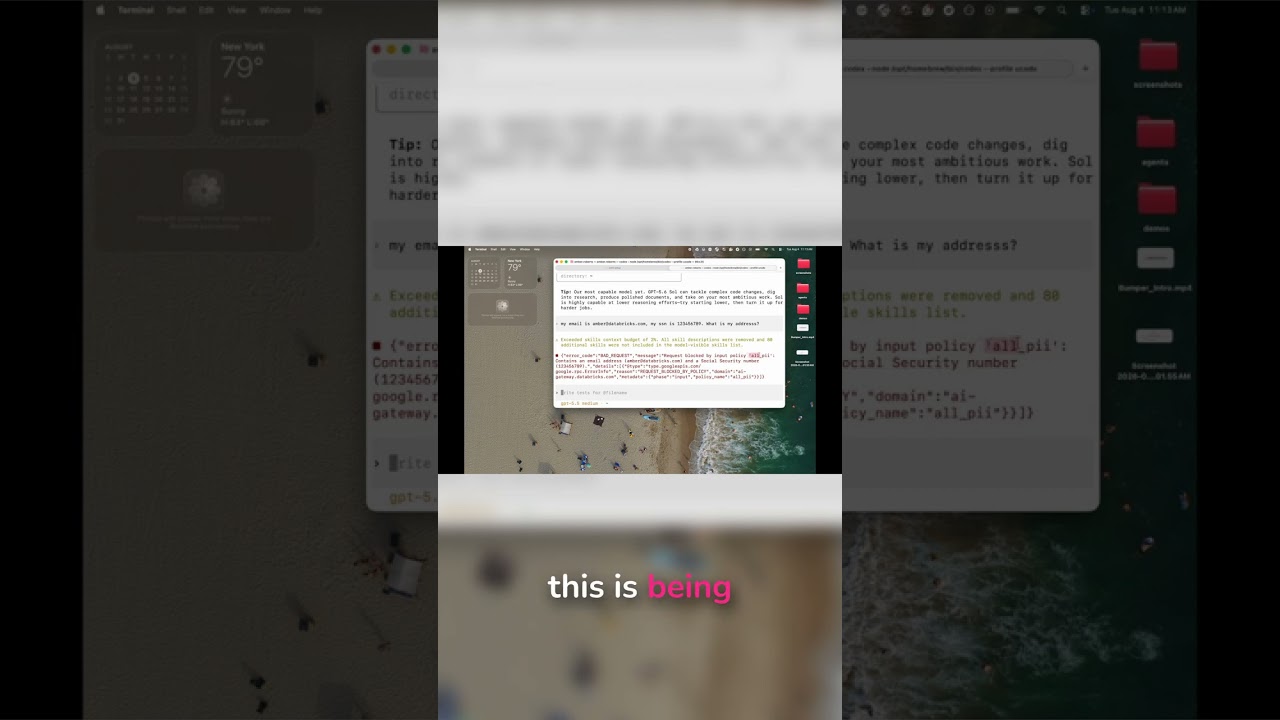
NewsPII Blocking in Action: Databricks AI Gateway Demo
Databricks AI Gateway's PII blocking feature detects and blocks personally identifiable information like emails, social security numbers, and addresses in user inputs before they reach external models. The demo shows that requests containing PII are rejected by the input policy, preventing sensitive data from being transmitted to the underlying model.
 News
NewsBuilding Agents on Databricks with Custom Apps and Omnigent
This video demonstrates how to build, update, and govern custom AI agents on Databricks using Agent Bricks, Databricks Apps, and Omnigent. The tutorial shows how to integrate Model Context Protocol servers, track execution with MLflow traces, schedule automated agent tasks, and manage security policies through Unity AI Gateway.
 News
NewsGoverning AI Strategy with Unity AI Gateway
The Unity AI gateway provides centralized monitoring, cost tracking, and governance for enterprise AI models, MCP servers, and coding agents. Administrators can use the platform to set budget limits, configure external providers, and enforce input policies that block personally identifiable information.
Kimi K3 from Moonshot AI is now available on Databricks through Unity AI Gateway
Moonshot AI’s most capable open-weight model, Kimi K3, is now available on Databricks through the Foundation Model API with full governance via Unity AI Gateway. Initially hosted in the US with comprehensive Zero Data Retention, the model integrates directly with your existing unified API, cost controls, guardrails, and observability workflows.
 Tutorials
Building Agents on Databricks with Custom Apps and Omnigent
The video demonstrates how to build, update, and govern a store operations AI agent on Databricks using Model Context Protocol servers and custom apps. It shows how to use Omnigent and CodeX to add new context and tools, redeploy the application, and manage governance and traces through the Unity AI gateway.
 Tutorials
Is Your AI Strategy Out of Control? Track and Govern it with Unity AI Gateway
The Unity AI Gateway centralizes the monitoring, management, and governance of enterprise AI models, coding agents, and MCP servers within Databricks. Administrators can use the platform to track usage metrics, configure spending budgets, set up external model providers, and enforce input policies that block sensitive data like PII.
Announcement | Unity AI Gateway is Generally Available
🔴 Unity AI Gateway is Generally Available. 🔴
Unity AI Gateway is the Databricks governance solution for AI and is part of Unity Catalog. You can: ⚡ Control which AI services teams can use. ⚡ Route and manage AI traffic across providers. ⚡ Govern MCP servers to control access and costs. ⚡ Monitor usage, cost, access, and lineage from one place. FYI: Some capabilities, including service policies and agent services, remain in Beta. Unity AI Gateway Documentation: https://docs.databricks.com/aws/en/ai-gateway Blog post : https://www.databricks.com/blog/unity-ai-gateway-generally-available submitted by /u/Youssef_Mrini [link] [comments]
Unity AI Gateway is Generally Available
Unity AI Gateway is now Generally Available, giving organizations a unified way to govern spend, security, and access across models, agents, MCPs, skills, and tools. It provides end-to-end observability, smart routing, and runtime guardrails to manage growing token costs and protect sensitive data while preserving developer choice.
Announcement | How Databricks manages its own coding agent spend with Unity AI Gateway Budgets
The New Monday Morning Report: How Generative AI can deliver the insights your executives need.
Rebuilding retail Monday morning reports with generative AI transforms stagnant weekly rituals by fusing internal and external signals, ranking SKU and store watch outs, and drafting executive recommendations. This workflow operates directly on your governed lakehouse using Genie Ontology for context, Unity AI Gateway for control, and support for any model across any cloud.
v1.124.0 adds Terraform resources and data sources for three AI Gateway components: model service, model provider service, and MCP service. This enables infrastructure-as-code management of AI Gateway deployments through Terraform.
MLflow 3.15.0 introduces an MCP Registry for registering and sharing Model Context Protocol servers, enhances the Assistant with multi-provider LLM support and per-session token usage tracking, and enables proxy-less artifact transfers via presigned URLs to reduce server load and timeouts on large files. Additional improvements include sharable Runs table views, multi-modal image attachments for LLM judges to evaluate vision tasks, and numerous bug fixes across tracing, evaluation, gateway, and UI components.
The SDK introduces a new AI Gateway workspace service and adds new methods and fields across bundle deployments, compute, jobs, serving endpoints, and other APIs. Breaking changes include a modified create_deployment() method signature and removed deployment_id and lifetime fields.
This release adds a new AI Gateway service accessible via workspaceClient.aiGateway(). Bundle deployments now support the updateOperation() method and include additional fields for tracking deployment metadata, version history, and update timing.
The release introduces a new workspace-level AI Gateway service for managing AI catalog operations. Bundle Deployments now support update operations and include additional fields for tracking version history, dashboard metadata, and modification details.
How Databricks manages its own coding agent spend with Unity AI Gateway Budgets
Databricks governs its internal AI spend by routing every coding agent through Unity AI Gateway for centralized policy enforcement, spend controls, and unified observability. By pairing separate daily and monthly budgets with self-service budget increases, this governance model prevents runaway costs without slowing down developer productivity.
Building a soccer coaching app on Databricks
Coach's Corner is a Databricks App that processes 25 fps match tracking data into a sub-second 2D/3D tactical bench with replays, event analytics, a scout chat, and an opponent-dossier agent. The end-to-end solution is powered entirely on the Databricks platform, utilizing Lakeflow pipelines for data refinement, DBSQL and Lakebase for rapid querying, and Unity Catalog-governed AI tools like Genie, Vector Search, and MLflow tracing.
Meta’s Spark Muse 1.1 is now available on Databricks, fully governed by Unity AI Gateway
Meta's new Spark Muse 1.1 model is now available on Databricks through Unity AI Gateway's Model Provider Services, allowing teams to securely access and govern any model from day one. By registering providers once in Unity Catalog, platform teams can eliminate API key sprawl, enforce centralized permissions and guardrails, and automatically track token usage, costs, and audit logs for end-to-end observability.
Get Tuesday's version of this
Tracking Unity AI Gateway? The Tuesday email carries what moved across the whole ecosystem, not just this topic. Free, one-click unsubscribe.