Brickster Newsletter
|
| 01 |
What should your AI agent remember?
How memory works, what it costs and three checks before a pilot.
|
|
| 02 |
In brief
Model training, AI spending, marketing agents and two November deadlines.
|
|
| 03 |
From Brickster.ai
Learn Spark with Brickster Mars Colony, our free mobile app beta, and join the brickster.ai community on Reddit.
|
|
|
|
01
|
🧠 Agents that remember
|
|
01 / THE LEAD
What should your AI agent remember?
An assistant that remembers useful details could save you from repeating the same instructions every week. Databricks is bringing that idea to custom AI agents. For business teams, the next question is which lessons deserve to stay.
|
|
|
Last week, you asked your team’s AI assistant to put the regional sales summary first. This week, you have to explain it again.
|
|
Now imagine carrying that preference into the next conversation. The agent could also reuse the steps that solved a similar question or apply a correction you made last time. Over a week of recurring work, that could mean less time explaining and fewer mistakes repeated.
|
|
That is the promise of Agent Memory, announced by Databricks on October 20. It gives developers a way to add lasting memory to the custom AI agents they build for your business, so selected preferences, corrections and useful past work can carry into later conversations.
|
|
Think of a conversation as a meeting transcript, and memory as the notes you carry into the next meeting. The transcript records what happened. The notes keep the details that may help next time. An agent can save a useful detail during a conversation, while a background process can review earlier conversations and organize what to keep.
|
|
A preferred report format may be useful for months. A live sales figure needs to come from the latest data. The aim is to keep lasting lessons while looking up fresh figures when needed. Your team needs to decide which details the agent should carry forward.
|
|
The early research offers a reason to test the idea. Databricks evaluated MemCurrent, the research system behind Agent Memory, on tasks built from real conversations. Here is how it compared with agents that had no memory.
|
|
📊 Results from Databricks’ research test
|
|
22.3%
Task pass rate without memory
|
68.4%
Task pass rate with MemCurrent
|
31%
Fewer tokens per task in this test
|
Databricks tested MemCurrent on 114 selected tasks derived from internal Genie conversations. Pass rates are averages across three runs, with answers scored by an AI model. These are research results, not a forecast for your rollout. Tokens are small units of text processed by the model; fewer tokens do not show the full cost of running memory.
|
|
🛠️ Four uses worth testing
|
| 🎧 |
Support that knows the customer
Keep a customer’s contact preferences and relevant support history, so they have less to explain next time.
|
| 📖 |
One team glossary
Give a team’s agent a shared glossary of company terms and agreed conventions.
|
| ⏱️ |
Reusing past work
Save the steps that solved a data question, so a related task can reuse the approach.
|
| ✅ |
Corrections that carry forward
Databricks showed an internal example where an agent saved feedback about invented results, then checked the real query output on a later task.
|
|
|
|
For a pilot, choose one recurring task where you can see whether the saved context helps. Databricks stores both conversations and memories in Lakebase, a database it manages in your workspace. Databricks says developers can read, export and delete the saved entries. It also needs to manage the running costs and decide how those entries are handled.
|
|
Measure the full cost. During Beta, there is no separate charge for the memory feature itself, but the Lakebase database is billed, and Databricks says pricing may change. Background updates also incur processing and model-use charges. The research does not clearly say whether its token saving includes that preparation. Test total cost per successful task, alongside answer quality and time saved.
|
|
Plan for deletion. Keeping useful lessons also changes what it means to delete a chat. Removing stored conversation history does not automatically delete the memories derived from it. Your app needs a process for both, including a decision about how long each is kept.
|
|
Check who can access it. Deletion is only one part of controlling those saved lessons. User labels organize memories but do not enforce permissions. A person or application granted access to a memory store can read and change every entry in it. For strict separation between client companies, Databricks recommends a separate store for each client.
|
|
Databricks’ background process is designed to keep lasting preferences and workflows and leave out secrets. That is a design goal, not a guarantee that sensitive information cannot be stored. Developers can request an update or enable automatic updates roughly once a day; directly saved details can be available sooner.
|
|
Give memory an owner. As those updates revise or delete saved entries, someone needs to review incorrect or outdated lessons. Important business rules should still come from an approved source. Memory can help an agent reuse a lesson; your team still decides whether it is a good one.
|
|
Agent Memory is still in Beta, which Databricks classifies as not for production use. Use a controlled pilot to work through these choices with your data or IT team.
|
|
Agree three things before you start:
|
|
1. Set the rules. Choose which preferences and lessons the agent may keep, what it must exclude and who reviews the saved entries.
|
|
2. Test privacy and deletion. Check that each user sees the right information and that a deletion request reaches both conversation history and memory. Use separate stores where clients need strict isolation.
|
|
3. Prove the value. Compare the same tasks with and without memory. Measure answer quality, time saved and total running cost, including the database and background updates.
|
|
This article covers memory for custom agents. The ready-made Genie One assistant has separate, personal memory controls.
|
|
|
|
|
|
Memory is one part of running agents well. This week’s other updates cover model training, AI spending, marketing and two dates to put on your calendar.
|
|
Model training
AI Runtime reaches general availability
Databricks announced general availability of AI Runtime on October 21. It provides managed, on-demand GPUs, the processors used for demanding AI work, so teams can train or adapt models using data in Databricks. Databricks says supported regions and GPU availability vary by workspace. Before funding model training, ask whether an existing model already meets the business need.
General availability ·
TechTarget ·
Requirements
|
|
|
AI costs
How Databricks keeps its own AI bill in check
In two recent interviews, co-founder Patrick Wendell and engineer Kevin Stumpf described Databricks’ approach: show teams what they spend, use lower-cost models that meet the required quality, and warn people before restricting access. Spending limits can catch runaway use. Ask whether your team can see AI spending by person and project, alongside the work it produces.
Wendell interview ·
Cost management interview
|
|
|
Marketing
CustomerLake Campaign Agents enter Beta
Databricks moved CustomerLake’s Campaign Agents into Beta on October 19. Marketers can describe an audience in plain language and build it using customer data already in Databricks. Access goes through the account team for customers meeting the technical requirements. If marketing copies customer data into another tool, ask which work this could replace and who would manage it.
Beta announcement ·
CMSWire
|
|
|
Deadlines
Two November deadlines
November 1: review partner-powered AI settings. Databricks will remove the self-service control for whether certain AI features use partner models. Each workspace keeps its current setting. If the setting is on, it can no longer be turned off on the settings page; admins can still change it through the settings API until November 1. After that, changes go through the Databricks account team. Ask your admin to check the setting now and arrange any change.
November 19: move off the retiring DeepSeek model. DeepSeek V4.1 Flash retires on that date. Databricks recommends its newer version, DeepSeek V4.1 Flash (1017), as the replacement. Find affected applications and test the replacement before the deadline.
Partner AI settings ·
DeepSeek retirement
|
|
|
|
|
|
New from brickster.ai · mobile app beta
Learn Spark by building a base on Mars
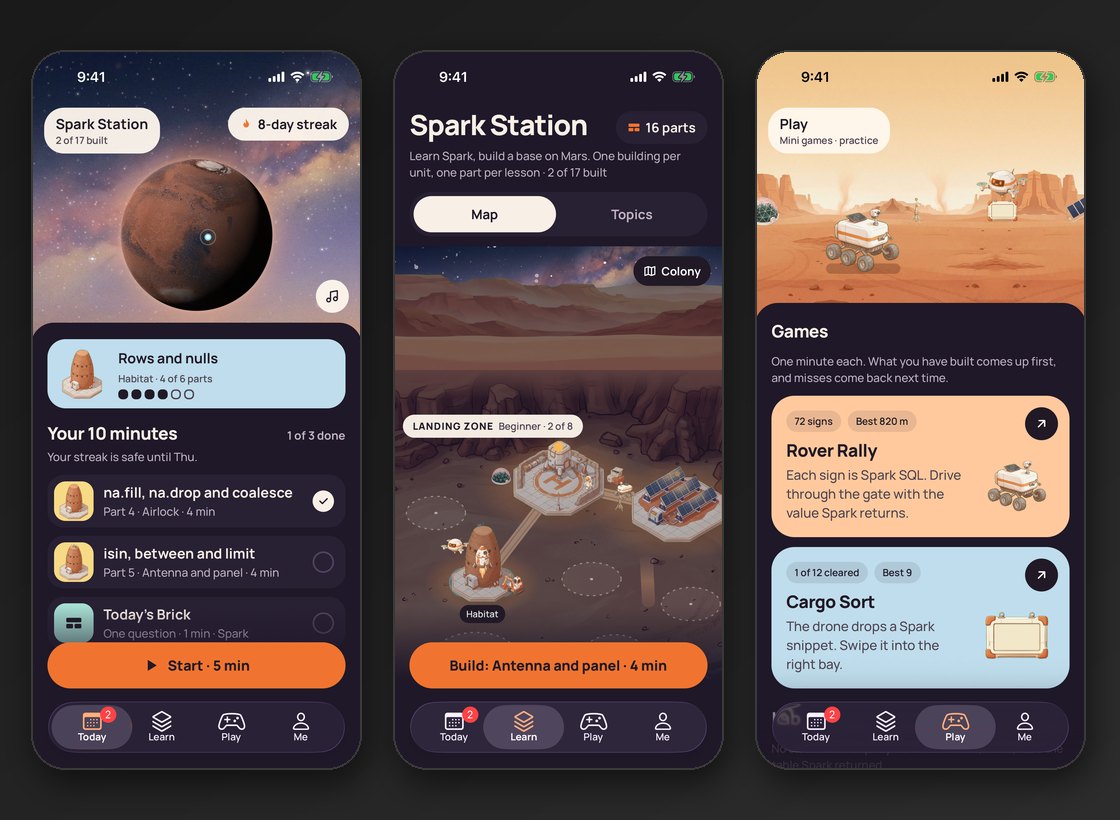
Brickster Mars Colony is our new mobile app for learning Apache Spark in short daily lessons. Each completed lesson adds to your base on Mars. Questions are checked on Spark or against documentation. Use it to build Spark skills or support preparation for the Databricks Certified Associate Developer for Apache Spark exam. No Brickster account is needed, and progress is stored on your phone.
The beta is free, and we are looking for testers. Tap Get my beta invite below and the form opens with your request filled in. The article below explains what is included and what we would like you to test.
Free, no account, no ads. Add your name and Apple Account email and we’ll email you a TestFlight invite (Apple’s app for trying apps before release). iPhone first; Android testing has not started yet.
See what is included and what to test →
|
|
|
We also have a new place to talk. Join r/brickster_ai to ask Databricks questions, share what you build and tell us what brickster.ai should cover next.
|
|
|
|
Planning a memory pilot? Ask the Brickster Assistant: “What should we check before giving a Databricks agent long-term memory?” It searches our archive and links to its sources.
|
|
Enjoying the Brickster Newsletter?
Forward this to a colleague who works with Databricks.
Share this issue ↗
|
|