


Databricks Unity Catalog: The Safe Way to Govern AI
Summary
Databricks Unity Catalog provides a single governance layer for data and AI assets, enabling discovery, classification, protection, and certification of data. It demonstrates how to use Unity Catalog for context-aware search, automated lineage tracking, tagging sensitive data with govern and non-govern tags, and applying column masking for data protection.
Summary generated by brickster.ai from the video transcript.
More from Databricks Skill Builder
 Tutorials
Configure AWS Backend Private Link: Keep Traffic Off the Internet
The video demonstrates how to implement Databricks backend Private Link in an AWS workspace using two different approaches: standard configuration and fully private configuration. It shows the step-by-step process of creating private subnets, security groups, and VPC endpoints, and registering them to ensure secure network traffic without exposing workloads to the public internet.
 Tutorials
Multi-Part Series: App Developer - Introduction to Databricks Development
This video introduces the Databricks App Developer skill builder series, which covers application architecture, identity and governance, data and compute choices, AI integration, deployment, and operations through a series of hands-on labs. It highlights Databricks Apps, AppKit, Lakebase, and Unity Gateway as key tools for building and managing secure, scalable data and AI applications.
 News
Building on Lakebase | Episode 3: Branch, Test, and Ship: Release Changes Safely using Branching
Lakebase branching allows developers to test database schema and code changes on isolated, production-like data branches without affecting production. The demonstration shows how automated GitHub Actions workflow uses pull requests to create branches, run migrations and tests, review schema diffs, and merge changes.
 Releases
Can AI Really Model Your Data in Hours? Databricks Vibe Modeling
Databricks Vibe Modeling enables businesses to build an enterprise-ready silver layer using AI agents guided by plain-language descriptions and domain taxonomies. The approach streamlines data modeling by automating the creation of schemas, entity relationships, and documentation, allowing teams to iterate on and validate data models in hours instead of months.
 News
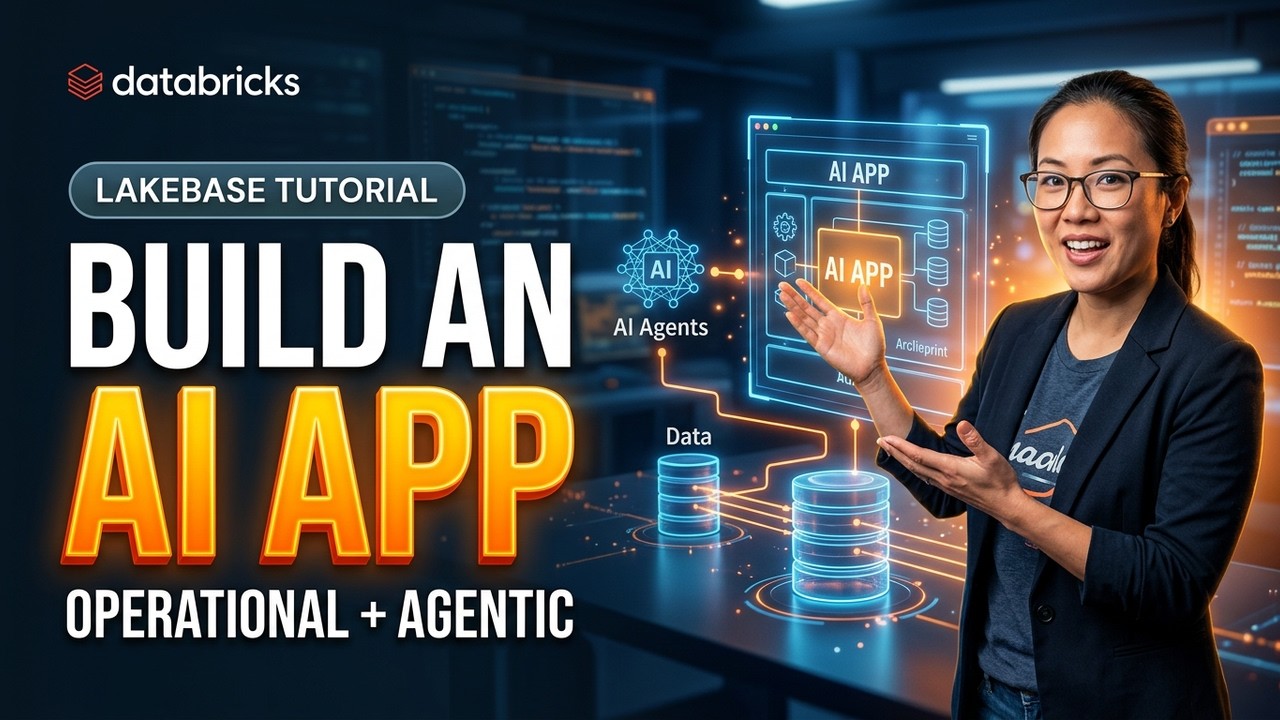
Building on Lakebase | Episode 2: Anatomy of an AI app: build the operational + agentic app
This video demonstrates the architecture and deployment of a customer support AI co-pilot built as a Databrics app backed by Lakebase. It walks through configuring a transactional operational store, hybrid search, managed agent memory, and MLflow tracing to power an interactive agentic application.
 Tutorials
Create a Classic Databricks Workspace using AWS Automated Configuration
Databricks classic and hybrid workspaces on AWS can be automatically provisioned using an IAM temporary delegation flow that configures underlying cloud resources and networking. This automated setup process creates necessary cross-account IAM roles, custom VPCs, and workspace storage buckets while handling authorization and resource deployment directly through the Databricks account console.