
Integrating External AI Models with Databricks
Summary
The video demonstrates adding an external OpenAI endpoint to Databricks by entering a provider name, API key, and selecting a model version. Once created, the endpoint is ready for use within Databricks.
Summary generated by brickster.ai from the video transcript.
More from Databricks Skill Builder
 Tutorials
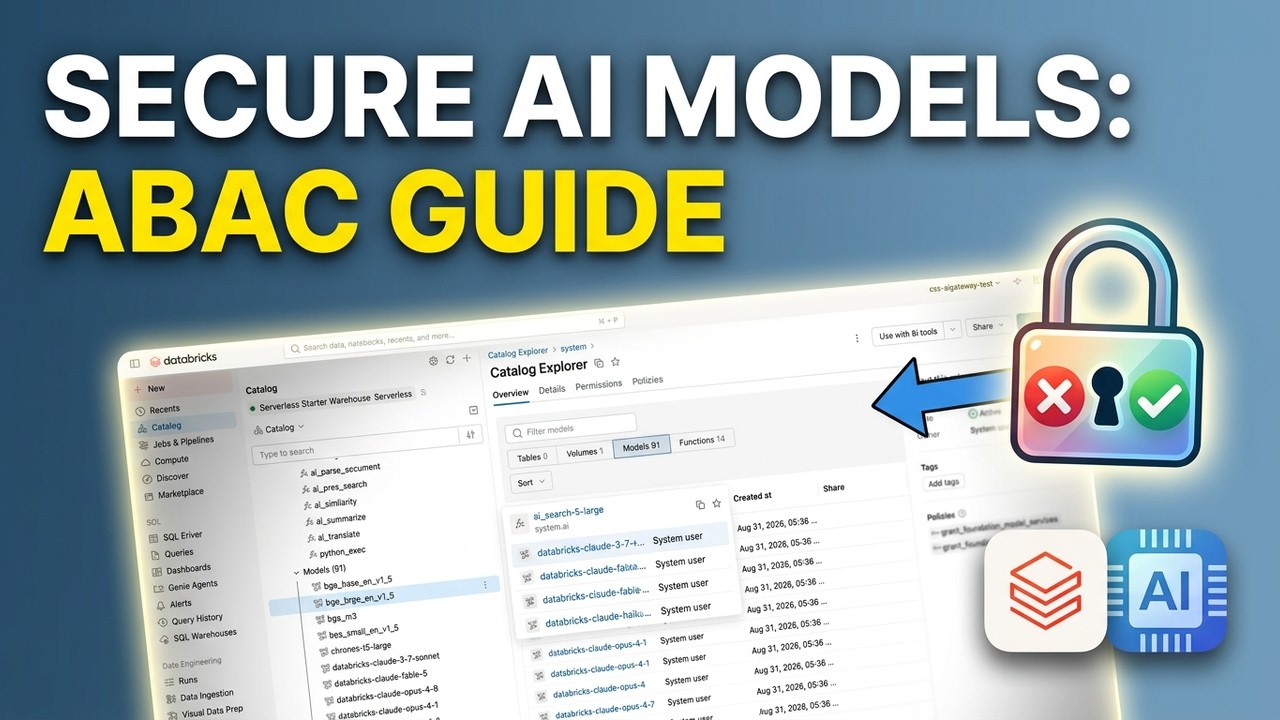
Govern Models and Model Services Using ABAC Grant Policies
Databricks models and model services can be opted out of using catalog tags combined with attribute-based access control grant policies. Executing this setup requires applying tags to specific models, writing programmatic policies with exclusion statements, and revoking schema-level permissions.
 News
NewsDatabricks Unity AI Gateway: Manage AI Strategy!
The Databricks Unity AI Gateway provides administrators with a centralized platform to monitor, manage, and govern a company's artificial intelligence strategy. Administrators can use this interface within the Databricks workspace to oversee and enforce governance policies for various proprietary models, open-source models, and coding agents.
 News
NewsMonitor AI Model Usage & Spending on Databricks
Databricks AI Gateway enables admins to select which MCP server tools are exposed to agents and view their governance configuration. Usage tracking is automatically enabled to provide centralized visibility into model token consumption and spending metrics.
 News
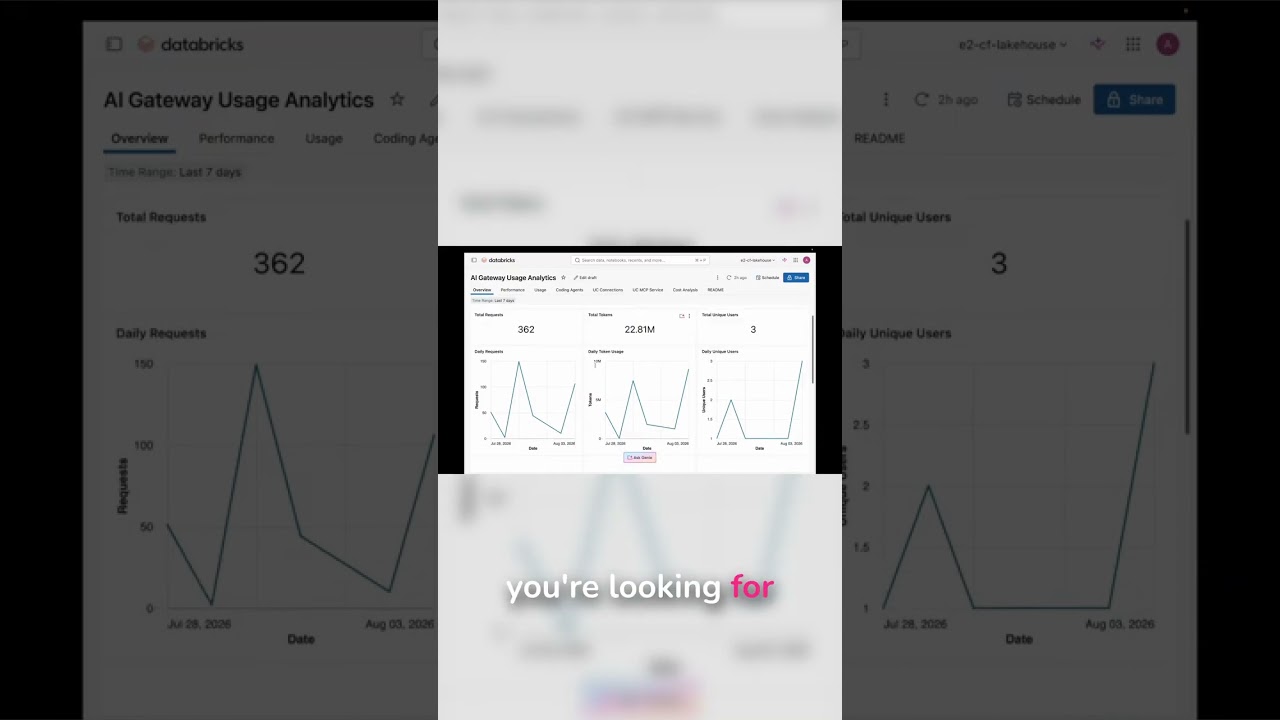
NewsAI Usage Dashboard: Track Metrics & Performance!
Databricks offers an out-of-the-box usage dashboard that tracks aggregate AI usage metrics across an organization, including daily requests, token usage, and unique users. The dashboard displays model performance indicators like latency, time to first token, and tokens per minute, and is fully customizable for specific organizational needs.
 News
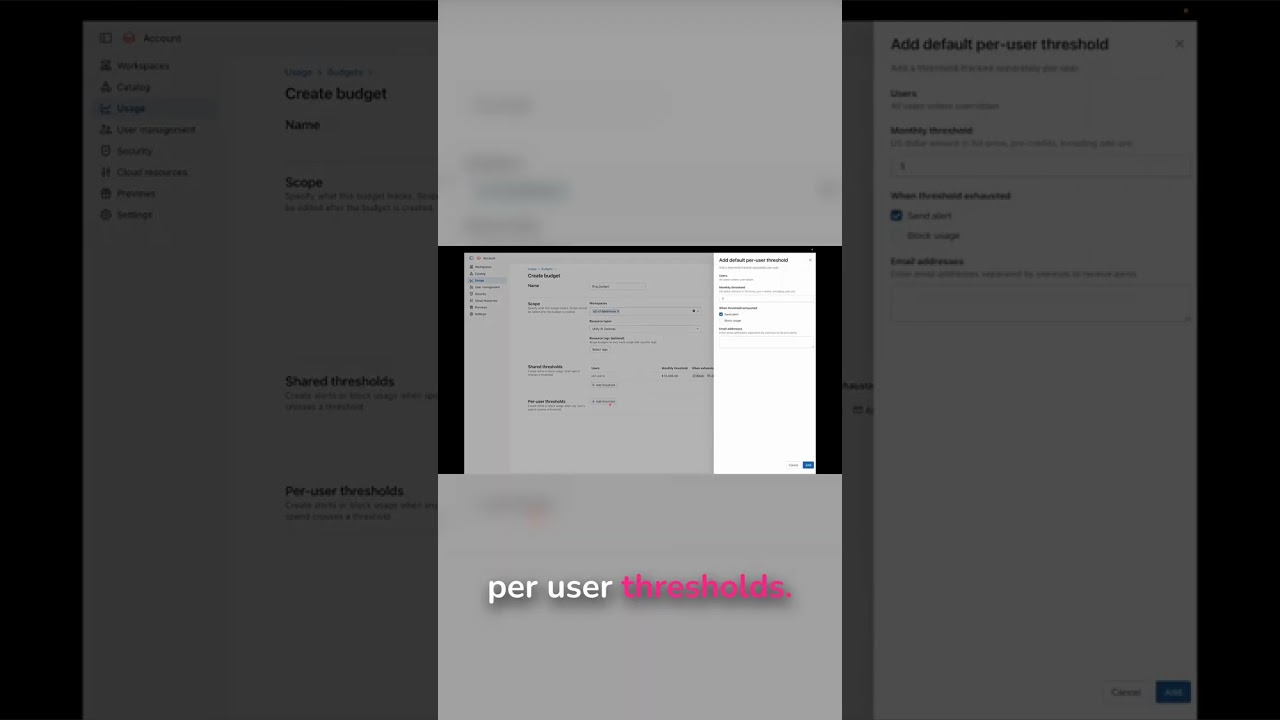
NewsConfigure Budget Thresholds for AI Models
Databricks allows you to configure shared budget thresholds (with a $10,000 cap and usage blocking) to control overall AI model spending. You can also set per-user budget limits (such as $5,000) with alert notifications to monitor individual consumption when certain users dominate budget usage.
 News
NewsAzure Pipelines: Triggering Deployments Based on Branches
Azure Pipelines YAML uses branch-specific triggers to automatically deploy code to different environments based on which branch receives the push. Dev branch deployments go to a dev workspace while main branch deployments go to prod workspace after PR approval.